
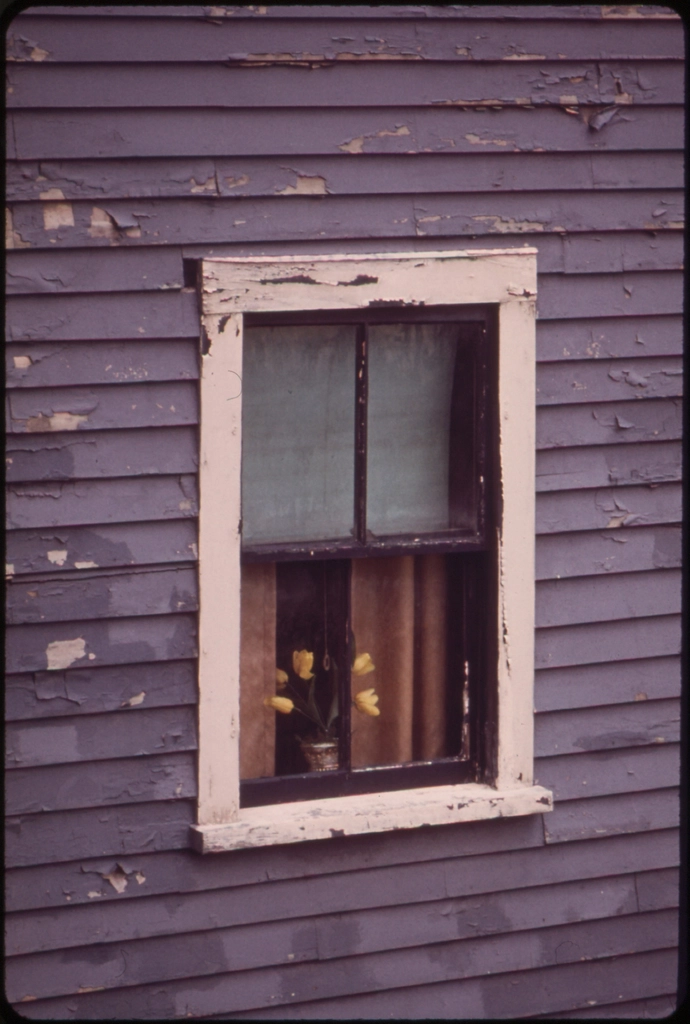
Nothing keeps its colour
Every coloured object is on a trajectory. Pigments break down under light, binders yellow, metals grow oxide layers, dyes migrate, and stone darkens with airborne soot. Some of this is loss and some of it is the material acquiring a surface that people value more than the original. The word that separates the two is patina, and deciding which category a given change belongs to is not a measurement, it is a judgement.
This article covers the mechanisms of colour ageing, how conservators measure and slow it, and the part that gets glossed over in popular accounts: that restoring an object to its original appearance is a contested position within conservation, not a neutral technical default.
Why colour fades
Fading is photochemistry. A colourant absorbs a photon, the absorbed energy raises a molecule to an excited state, and if that excited state can react — usually with oxygen or water present in the material — the chromophore, the part of the molecule responsible for absorbing visible light, is destroyed or altered. Once enough chromophores are gone, the colour weakens.
Several factors set the rate. Shorter-wavelength light carries more energy per photon, so ultraviolet and blue light do disproportionate damage. Higher temperature speeds the chemistry. Humidity and oxygen supply reactants. And the colourant itself matters enormously: inorganic mineral pigments such as ochres and cobalt compounds are extremely stable, while many organic dyes and lake pigments, in which a soluble dye is precipitated onto an inert substrate, are fugitive.
- Reciprocity, roughly. To a first approximation, damage depends on cumulative exposure — illuminance multiplied by time — which is why museum limits are expressed in lux hours per year rather than as a brightness cap alone. The approximation breaks down at extremes, but it is the working basis of display policy.
- The damage is not uniform. A mixed green made from a stable blue and a fugitive yellow turns blue as it ages, not pale green. Compound colours shift hue as their least stable component disappears, which is why faded paintings often read as tonally wrong rather than simply washed out.
- Some fading is reversible. A few colourants, notably certain lakes and some modern dyes, recover partially in the dark. Most do not. Assuming reversibility is a good way to lose an object.
- Substrate matters. The same dye on wool, on silk and on paper ages at different rates, because the fibre chemistry participates in the reaction and because different substrates hold different amounts of moisture.
The other ageing processes
Fading gets the attention, but several other changes alter colour as much or more.
Yellowing and darkening
Natural resin varnishes oxidise and yellow, and because the varnish sits on top of everything, it shifts the entire image towards amber. Oil binders yellow too, particularly in the dark. Lead white can darken through sulphide formation in polluted air. Many nineteenth-century bituminous browns never fully dried and continue to darken and crack.
Chemical conversion
Some pigments turn into different compounds. Vermilion, a mercury sulphide red, can blacken on exposure to light and chlorides. Certain cadmium yellows degrade to a chalky white. Emerald green, a copper arsenite, alters in the presence of sulphur compounds. These are not fading; they are one substance becoming another with a different spectrum.
Surface growth
On metals, the changing colour is an accumulating layer. Copper and bronze develop carbonate and sulphate patinas that read as the familiar green of roofs and statues. Weathering steel is specified precisely so that the rust layer will develop and then stabilise at a particular russet. Lead and zinc grey down. In these cases the ageing layer is protective as well as decorative, so removing it is both an aesthetic and a technical decision.
Soiling
Particulate deposition darkens and desaturates almost everything exposed to urban air. Unlike fading it is generally reversible, which is why cleaning masonry produces such dramatic before-and-after images — and why over-aggressive cleaning has destroyed so much stone surface.
Measuring change
Conservation science quantifies colour change with the same tools as industry, plus a few purpose-built ones.
- Colorimetric monitoring. Periodic spectrophotometer readings from fixed, documented points produce a record of drift over years. The difficulty is repositioning: on a textured surface, a millimetre of offset can swamp a decade of genuine change, so templates and photographic registration are essential.
- Microfading testing. A focused, intense beam is aimed at a spot well under a millimetre across, and reflectance is monitored continuously. Because the tested area is smaller than the eye can resolve, an object can be assessed for lightfastness without visible harm, giving curators an evidence base for whether a particular item can be displayed at all.
- Blue Wool standards. A set of eight dyed wool strips of graded lightfastness, exposed alongside a sample, giving a coarse but internationally understood rating. Long used in textile and print testing, and still a common shorthand in specifications.
- Accelerated ageing. Xenon-arc chambers compress years into weeks, but the acceleration factor is never trustworthy in absolute terms. The results are used comparatively — this formulation outlasts that one — rather than as a prediction of calendar life.
Prevention is mostly environmental: cap illuminance, filter ultraviolet, control temperature and relative humidity, rotate light-sensitive items in and out of display, and keep sealed items in inert atmospheres where justified. All of it trades access against longevity, and that trade is itself an institutional value judgement rather than a scientific result.
The restoration argument
Here is where the technical account stops being sufficient. Suppose an object has changed. What should be done about it?
One position holds that the artist or maker intended a particular appearance, that ageing has obscured it, and that removing yellowed varnish, cleaning soot from a facade or replacing a lost element restores access to the real work. Another holds that the object is a historical document whose whole life is part of its meaning, that the aged surface is evidence, and that intervention destroys information in pursuit of a state nobody alive has actually seen.
Both positions are held by serious people, and neither is settled by instruments. It is worth saying plainly: returning something to its original state is a contested conservation decision, not a technical obvious. The measurement tells you what has changed. It does not tell you whether that change is damage.
- The original may be unknowable. Freshly applied paint looks different from paint that has cured for even a year. There is usually no reliable record of the appearance at any moment, so the target of a restoration is inferred, often from small protected areas that may not be representative.
- Cleaning is not reversible. Solvent removal of varnish takes original glazes with it in some cases, and the profession has fought bitterly over specific campaigns, from the National Gallery cleaning controversies of the mid-twentieth century to the Sistine Chapel ceiling, where critics argued that a layer of deliberately applied shadow had been removed along with the grime.
- Taste is embedded in the decision. Generations of viewers admired the golden tonality of old master paintings, an appearance produced entirely by degraded varnish. Removing it does not reveal a neutral truth; it substitutes one historically situated appearance for another.
- Some fields have swung hard. The evidence that classical Greek and Roman sculpture was brightly painted has been available for over a century, yet the white marble aesthetic persisted because it suited later ideals. Reconstructions with the pigments restored still provoke discomfort, which says more about inherited expectations than about the archaeology.
- Reversibility and minimal intervention. The modern professional consensus favours doing the least that stabilises the object, using materials that a future conservator can remove, and documenting everything — precisely because today’s confident judgement is expected to look wrong later.
Digital reconstruction as a middle path
One reason the argument has cooled slightly is that it is now possible to show a reconstructed appearance without touching the object. Analytical techniques can identify surviving pigment traces; a physical model of fading can be inverted, with caveats, to estimate an earlier state; and the result can be presented as a projection, a print alongside the work, or an interactive display.
This is not a complete answer, because a reconstruction is still an argument with a confidence interval, and audiences tend to read a rendered image as fact. But it separates the interpretive claim from the irreversible act, which is a real gain.
Designing for the ageing you want
For anyone specifying materials today, the practical lesson is to choose the ageing path deliberately. Materials that age well — oiled timber, copper, lime render, unfilled stone — change in ways most people read as character. Materials that age badly — thin colour coatings over a contrasting substrate, saturated organic pigments in exterior use, plastics with fugitive colourants — go from new to shabby with no dignified middle period.
The most durable schemes tend to be the ones where the colour is in the material rather than on it, where the palette is drawn from stable inorganic pigments, and where the designer has looked honestly at a ten-year-old example of the same specification before signing it off. Colour that is planned only for the photograph taken on handover day is colour that has not really been designed.