
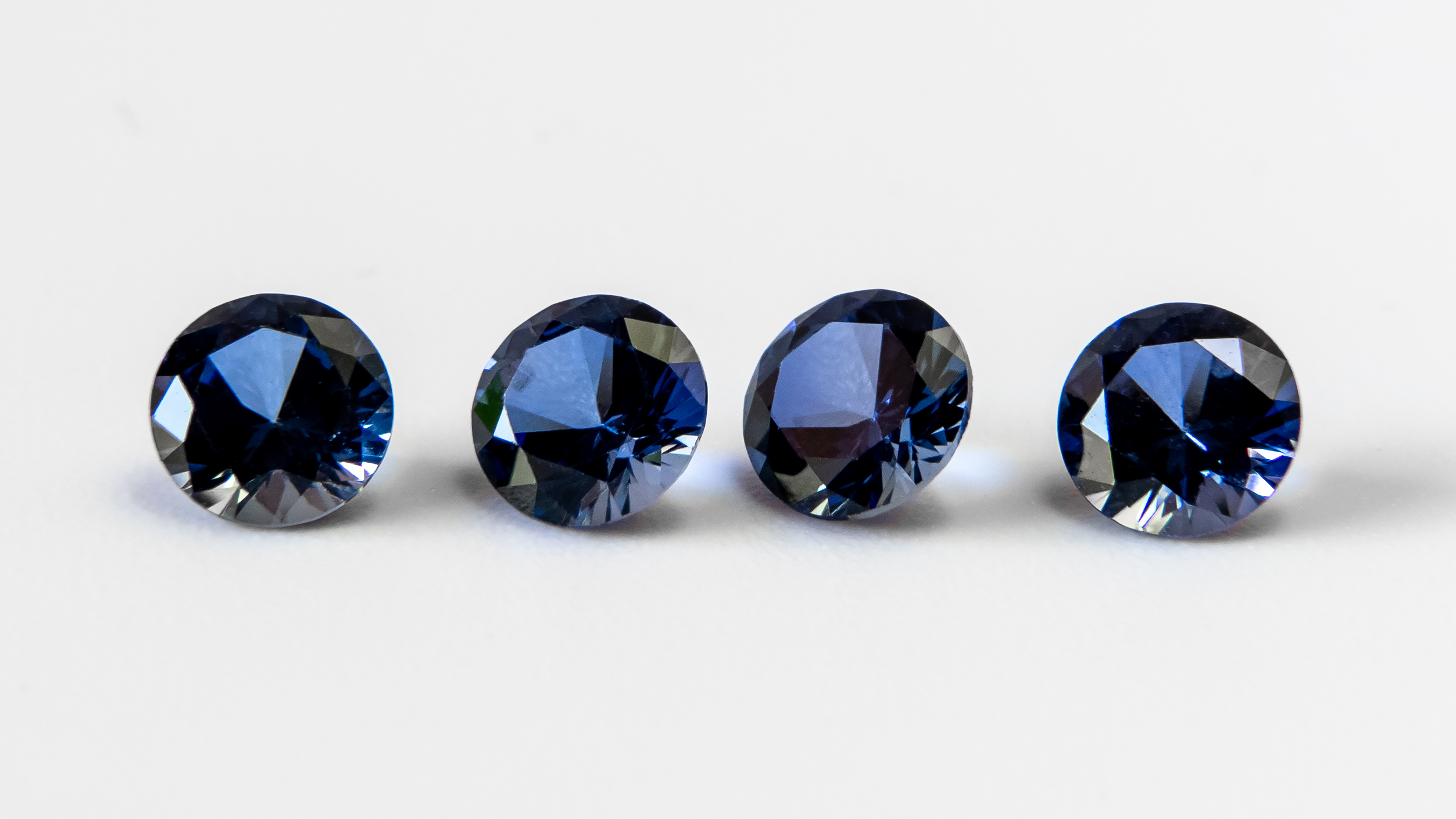
Ask what color sapphire is and the usual answer is blue, which is accurate but incomplete. The same mineral appears across much of the color wheel, and the way a blue stone is graded explains why two sapphires of the same hue can differ so much in appeal and price.
- Blue is the classic sapphire color, but fancy sapphires range from yellow and green to pink-orange and even black.
- Color is judged by hue, saturation and tone, and the purest vivid blues command the highest prices.
- Red corundum is a ruby, and pink falls on the border between the two, so labels depend on the stone.
Is sapphire always blue?
Blue is the color most people associate with sapphire, and the name itself points that way: it traces back through Latin and Greek roots, and in antiquity it referred to a stone that was probably lapis lazuli rather than the gem now called sapphire. Still, the modern definition is mineral-based rather than color-based. Sapphire is a gem variety of corundum, which is aluminium oxide containing trace amounts of other elements.
Those trace elements are the reason for the range of colors.
Sapphires that are not blue are called fancy sapphires. They turn up in yellow, orange, green, brown, purple and violet, and in practice in almost any other hue. Gray and black stones exist, and so do colorless ones. If you only ever picture one shade, you are missing most of what the category covers.
- Blue: the best-known and most sought-after variety.
- Fancy: any other hue, from yellow to green to purple.
- Parti: stones that show two or more distinct colors in one gem.
What makes one blue sapphire look better than another?
Color in a gemstone is usually described with three terms, and knowing them helps you read a description or compare stones side by side.
- Hue: the basic color of the stone, such as blue, or blue with a hint of something else.
- Saturation: how vivid or bright that hue appears.
- Tone: how light or dark the stone is.
Blue sapphires are judged mainly on the purity of the blue. Violet and green are the most common secondary hues that creep into a blue stone, and the more they shift the color away from a clean blue, the less the stone tends to be valued. The highest prices go to gems that are pure blue with vivid saturation. A stone that is too pale, too dark or only weakly saturated is worth less.
Preferences still matter. Some buyers like a deeper, darker blue and others prefer something brighter, so treat the grading logic as a guide to pricing rather than a rule about what looks best on you. One retailer guide notes that medium to medium-dark tones are typically the most preferred, which fits the general pattern of avoiding extremes.
Origin adds another layer. Kashmir stones are reported to earn the highest premium, though Burma, Sri Lanka and Madagascar also produce large quantities of fine gems. Every mine yields a wide range of quality, so an origin on its own does not guarantee that a particular stone is good.
Which other sapphire colors should you know?
If you are shopping or specifying a color for a design, the fancy range is worth a closer look, because a few of these varieties have their own names and market behavior.
Pink and the ruby boundary
Pink sapphires run from light to dark, and the color deepens as the amount of chromium increases. Generally the deeper the pink, the higher the value. Red corundum is not called sapphire at all; it is a ruby. Where pink ends and ruby begins is not fixed by the stone alone. In the United States a minimum color saturation has to be met before a stone can be sold as a ruby, otherwise it is called a pink sapphire. Pink corundum can be classified either way depending on the locale.
Padparadscha
Padparadscha is a delicate pink-orange to orange-pink corundum of light to medium tone. It was first found in Sri Lanka, with other deposits in Vietnam and parts of East Africa. The name comes from a Sanskrit phrase meaning lotus color. Among the fancy sapphires, natural padparadscha fetches the highest prices, and completely untreated stones are the rarest.
Parti and star stones
Parti sapphires, also called bi-color, show two or more colors within one stone, usually as zones of different hues. Their appeal is judged by where the colors sit, how saturated they are and how well they contrast. They are not common in mainstream jewelry. Star sapphires are a separate case: needle-like inclusions create a star effect known as asterism, which is a feature of the cut stone rather than a color.
Does lab-grown or treated sapphire change the color you get?
Sapphires reach the market in three broad forms: natural and untreated, natural and treated, and lab-made. Each affects what color you are likely to see and what you should expect to pay.
Treatment is common. Heat treatment is widely used on blue sapphires to improve color and reduce the look of flaws. Untreated stones are worth far more than treated ones, so a disclosure of treatment matters when you compare prices. For stones of one carat or more, buyers often ask for an independent report from a respected laboratory before purchasing.
Lab-made sapphires are still corundum, with the same basic chemistry as natural ones, only grown in a controlled setting instead of forming over geological time. Because they are produced with the aim of being as blue as possible, they tend to vary less in color and often contain fewer inclusions than natural stones. They cost much less. Many people still prefer natural stones for their rarity and origin story, which is a personal call rather than a matter of hardness or appearance.
Whichever you choose, keep these points in mind:
- Ask whether the stone is natural or lab-made, and whether it has been treated.
- Compare stones in the same lighting, since saturation and tone are easy to misjudge.
- Decide your priority first: the purest blue, a specific fancy hue, or a budget-friendly option.
Frequently asked questions
What color is a sapphire stone?
Blue is the best-known color, but sapphire is a variety of corundum that also occurs in yellow, orange, green, purple, pink, gray, black and colorless forms. Anything other than blue is sold as a fancy sapphire.
What is the most valuable sapphire color?
For blue sapphires, the highest prices go to stones that are pure blue with vivid saturation, while stones that are too light or too dark are worth less. Among fancy sapphires, natural padparadscha commands the highest prices.
Is a pink sapphire the same as a ruby?
Both are corundum, but red stones are called rubies and lighter pink stones are called pink sapphires. Where the line falls depends on color saturation and the locale, so the same pink stone may be labeled differently in different places.
Are lab-made sapphires a different color from natural ones?
They share the same basic composition, but lab-made stones tend to vary less in color and often have fewer inclusions because they are grown to be as blue as possible. Natural stones show more natural variation.
Related reading
- What Is the Opposite Color of Pink? Which Answer Fits Your Project
- What Color Is Apricot? Shades, Codes and How to Use It
Sources
- Blue Sapphire vs. Turquoise: What’s the Difference? (angara.com, accessed 2026-11-23)
- The Buyer’s Guide to Blue Sapphire (lilpetite.com, accessed 2026-11-23)
- Sapphire — Wikipédia (en.wikipedia.org, accessed 2026-11-23)
Photo: Four man-made faceted blue sapphires 1, by W.carter, CC BY 4.0 (Wikimedia, via Openverse)